Outlet recaps are still manual
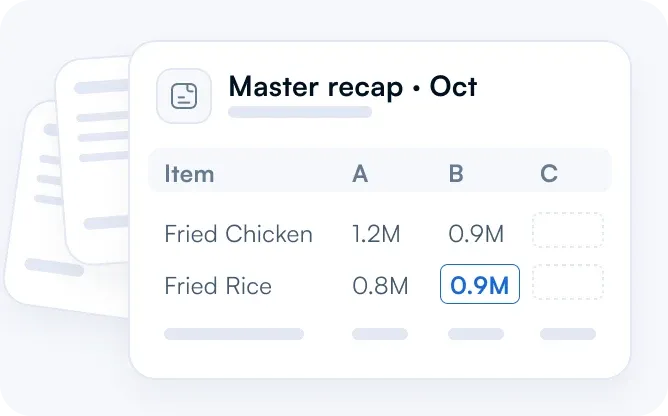
Each outlet sends its report separately, then everything is copied into one master file before anything can be compared.
 F&B Industry
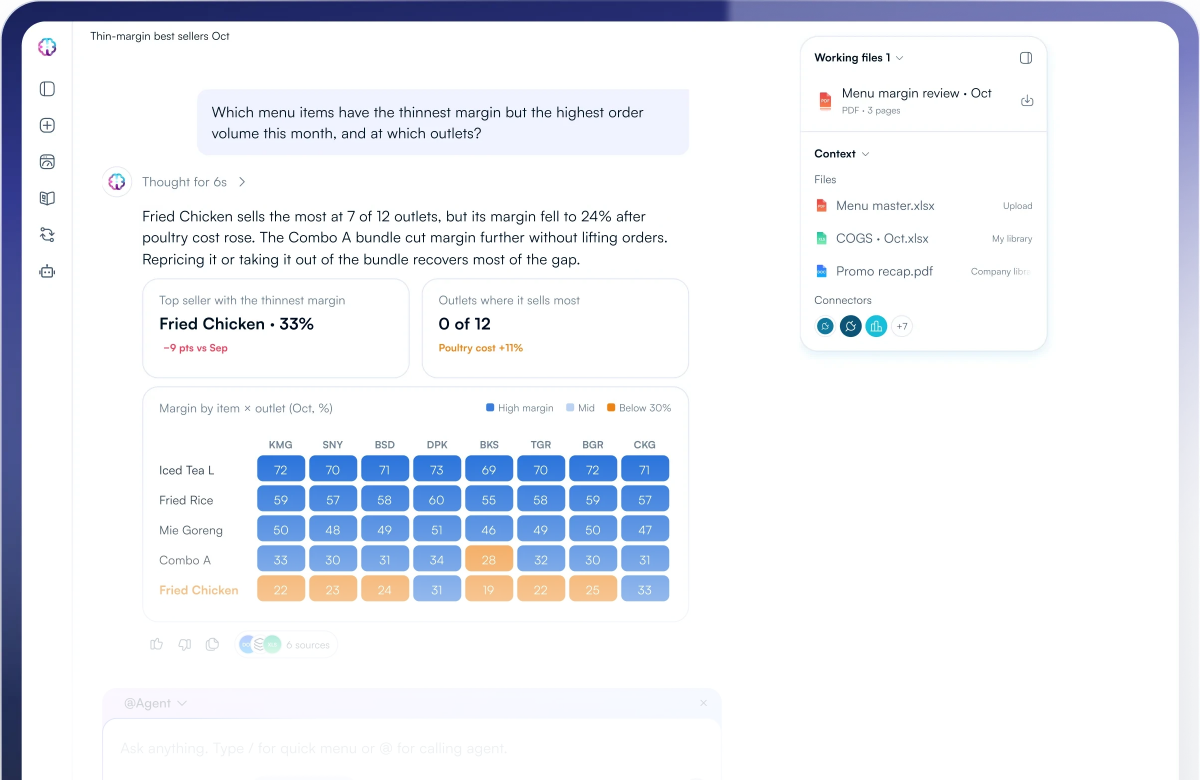
Sales data sits in the POS. Ingredient stock and COGS sit in the ERP. Targets and promos sit in spreadsheets. edic reads all of it at once, and answers the questions that used to take days of manual consolidation.
edic is built by eDOT, which has spent years building systems for F&B, retail, and distribution businesses in Indonesia.
THE PROBLEM IS NOT A SHORTAGE OF DATA
The more outlets you run, the more sources you have to open before a simple question can be answered.
Each outlet sends its report separately, then everything is copied into one master file before anything can be compared.
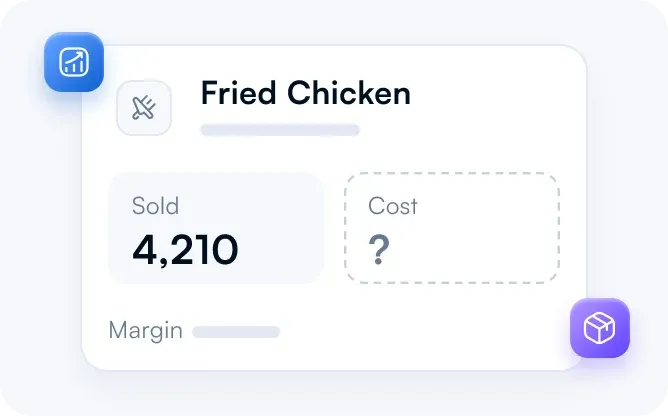
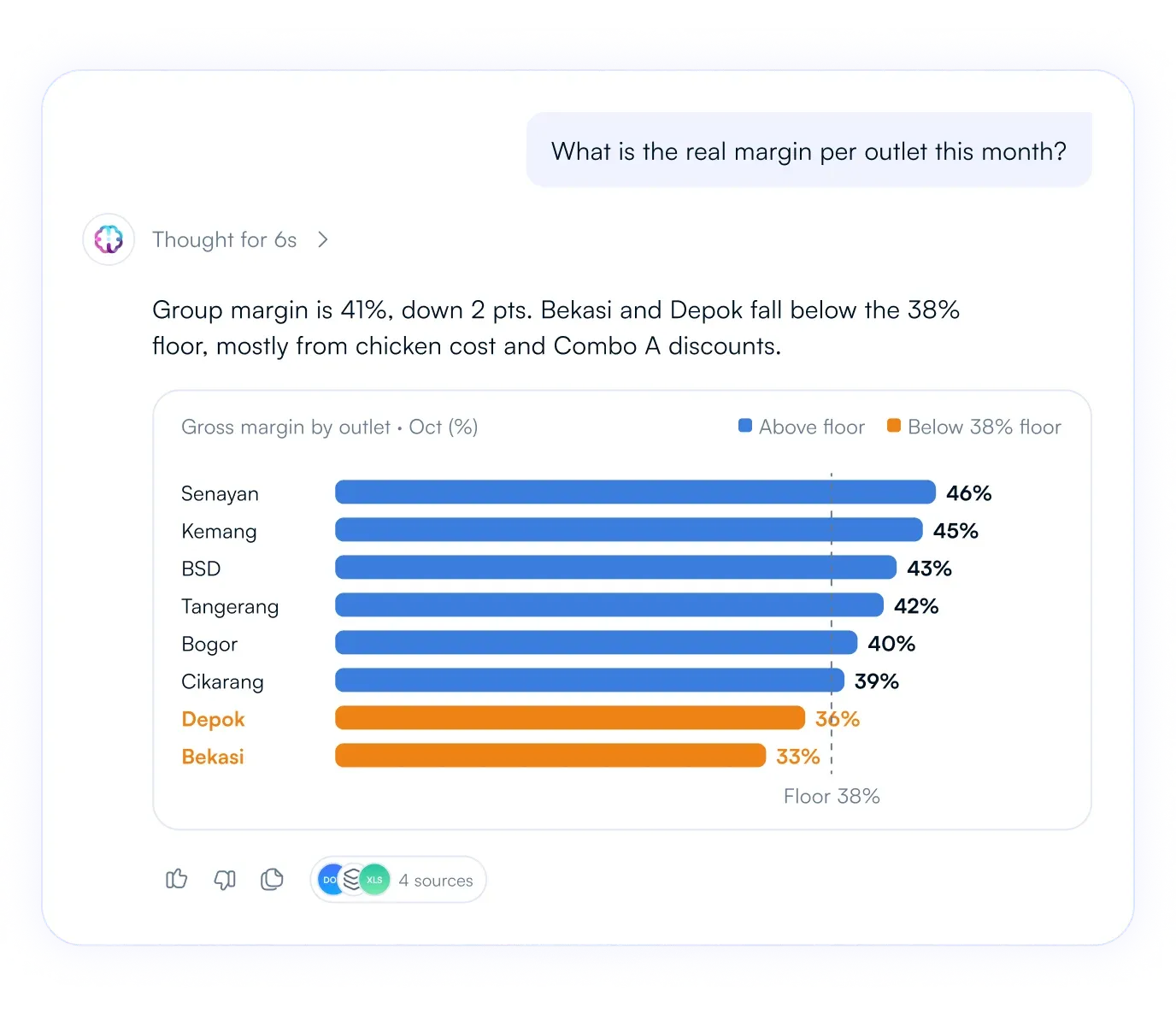
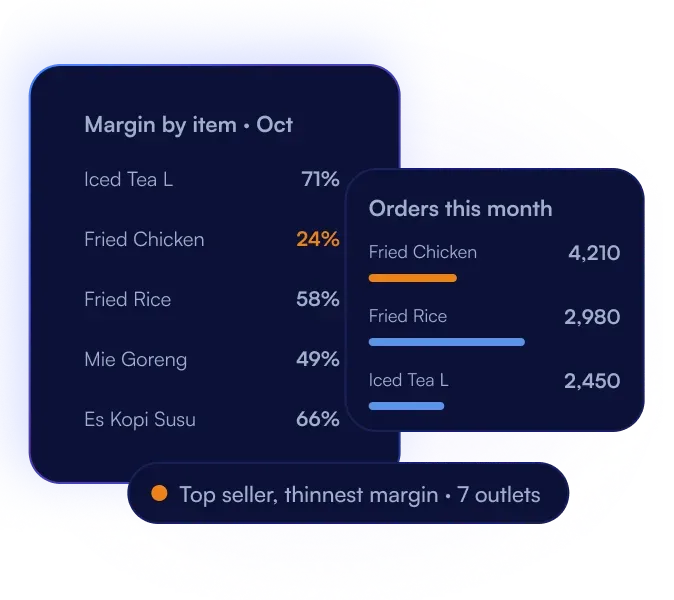
Sales figures sit in the POS while COGS and purchasing sit in the ERP. Margin per item only appears once the two are joined.
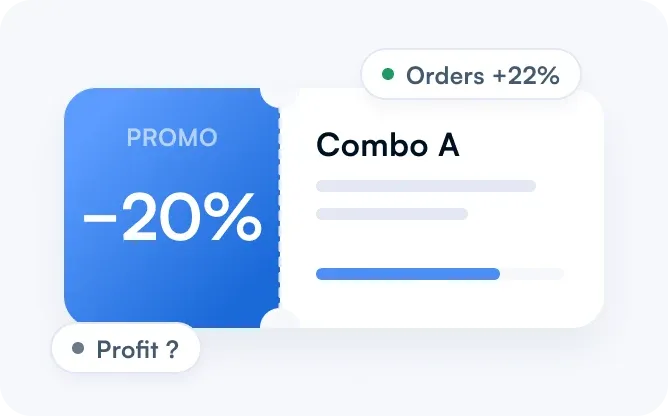
Revenue climbs while a promo runs, but profit does not always follow. Proving it takes a comparison nobody has time for.
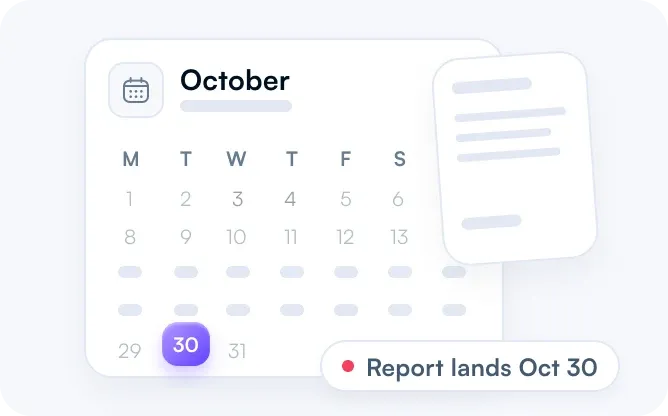
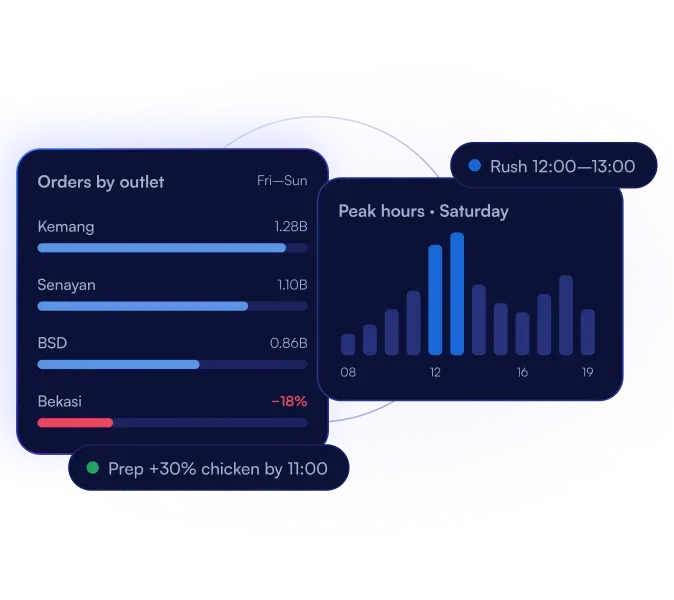
Ingredients running out at peak hours, queues building up, or falling transactions often only show up when the monthly report lands.
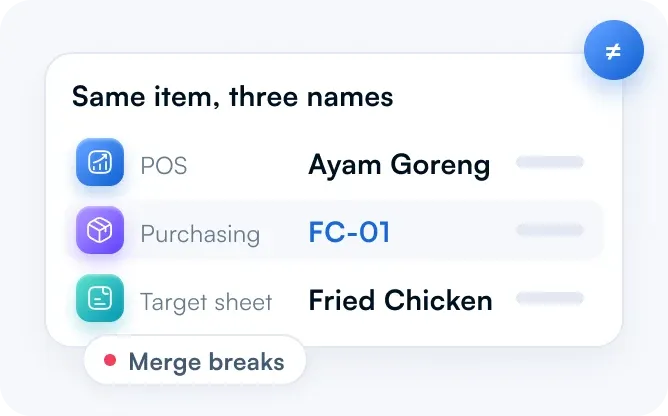
Menu names, ingredient codes, and closing periods rarely match across systems, which makes merging them error-prone.
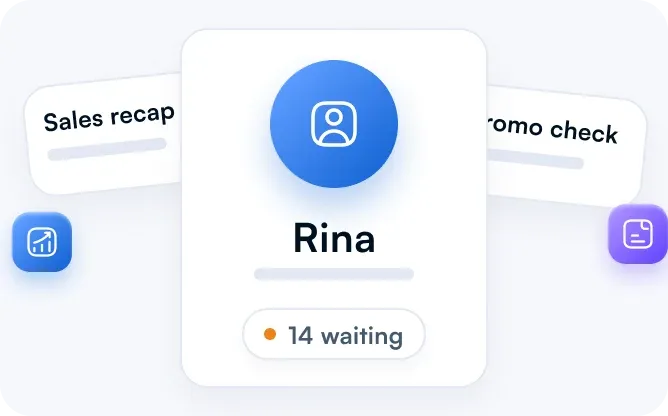
Only one or two people know how the data fits together. When they are busy, every report waits.
WHAT MAKES EDIC DIFFERENT
 Still Reads It.
No need to wait for a data consolidation project to finish, and no need to replace the systems already running. edic connects to the data warehouse or data mart you already have, while also reading the sources that still stand on their own.


Transactions by outlet, by hour, by menu item, including payment method and order channel.

Ingredient purchasing, COGS, inventory, and the financial data that determines real margin.

The structured sources your IT team already maintains, readable without SQL.

Excel, CSV, Google Sheets, and PDF documents that have been passed around over email and chat.
The list of supported systems keeps growing. To confirm that the systems your company runs are covered, bring them up during the demo.
BUSINESS IMPACT
Not just reports that arrive faster, but decisions made while there is still time to act on them.
Join POS sales with COGS from the ERP so every item shows its profit contribution, not just its unit count, giving any decision to reprice, resize, or retire a dish a basis in numbers.
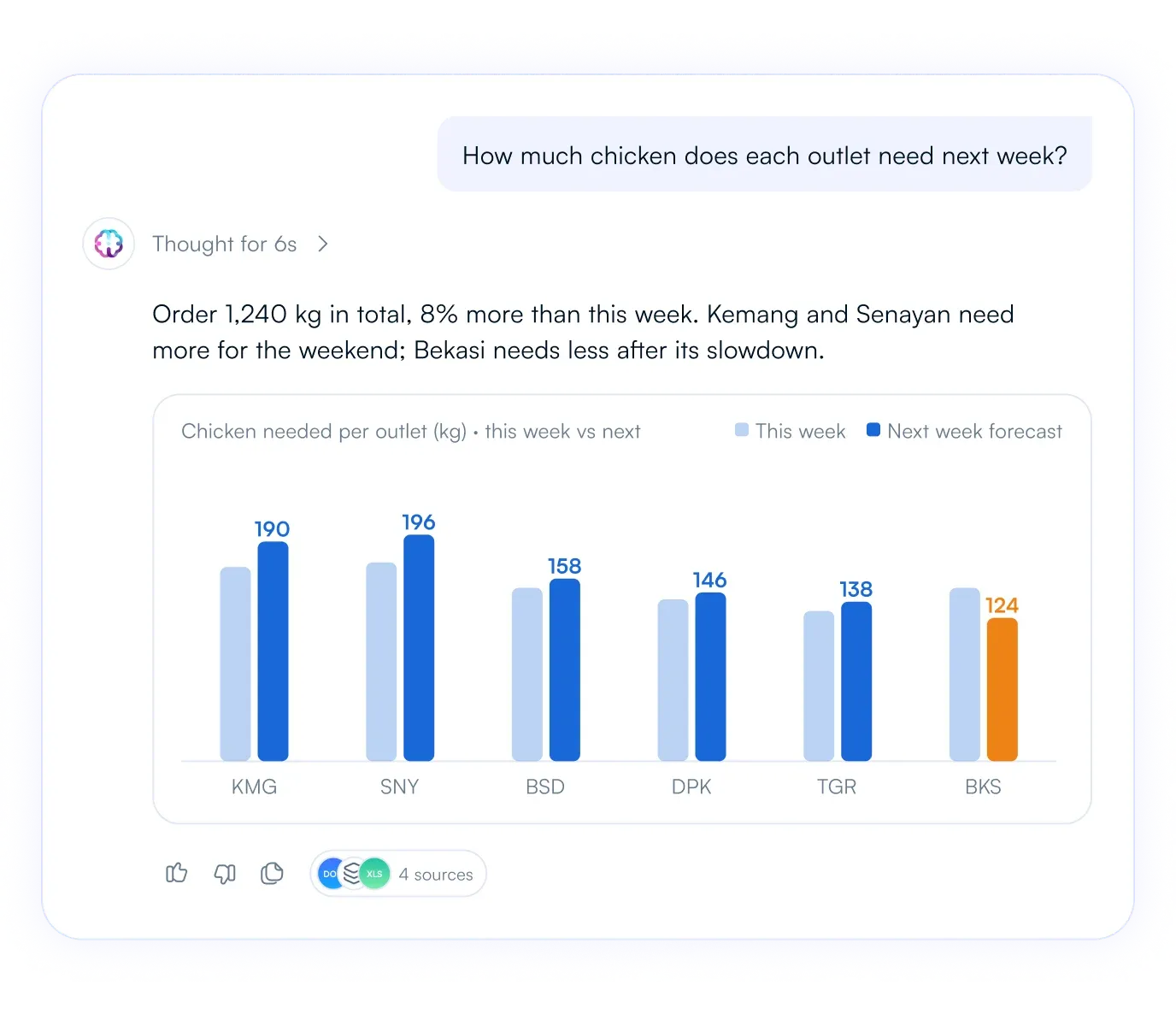
Read hourly and daily transaction patterns per outlet so ingredient purchasing and shift schedules follow real demand, rather than the instincts of one or two experienced people.
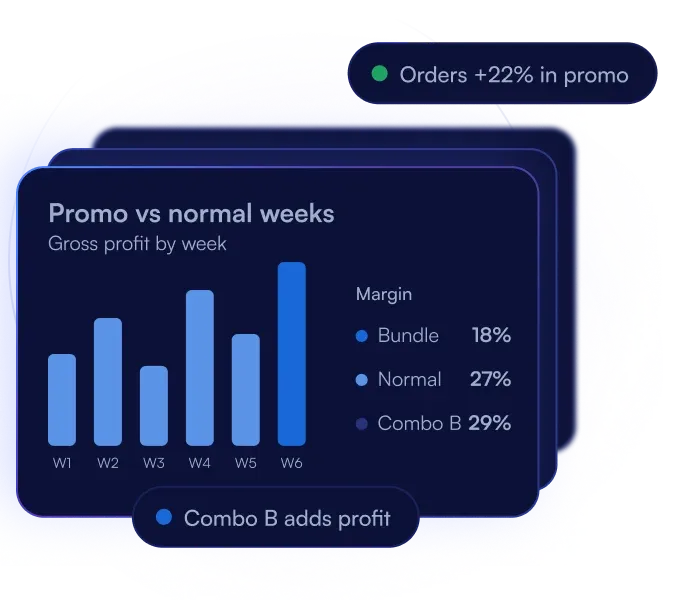
Compare promo and non-promo periods alongside their effect on margin and on other items, so the next promo budget goes to the programs that have already proven they add profit.
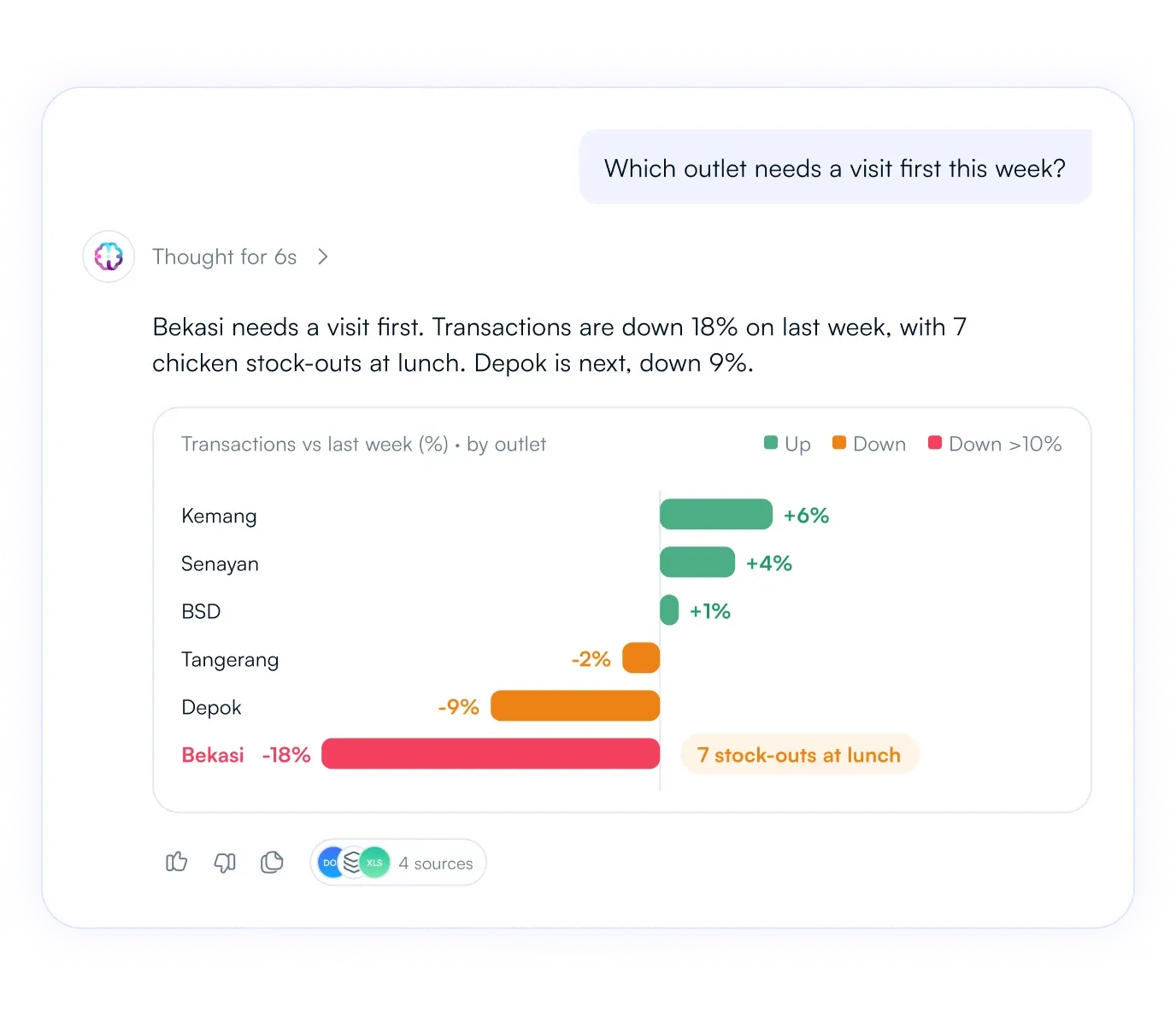
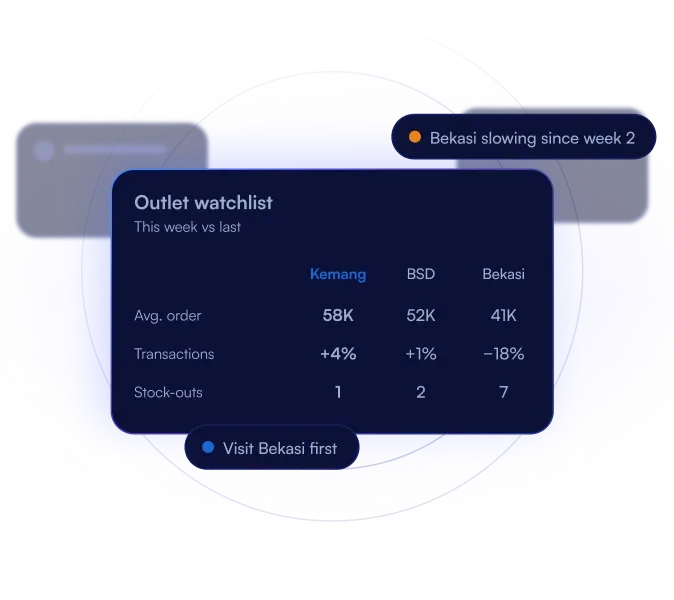
Track transactions, stockout events, and average order value per outlet on a regular cadence, so visits and interventions go to the locations that need them most.
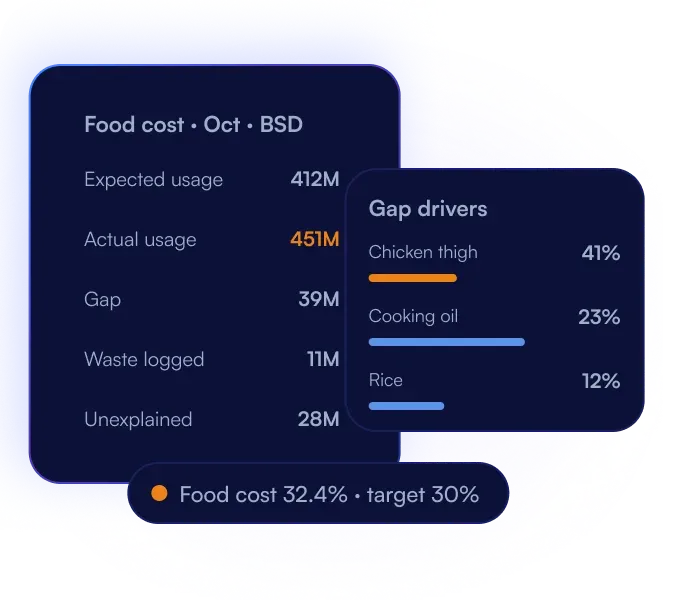
Connect ingredient usage with actual sales so the gap between what should have been used and what actually was becomes visible per outlet, along with the items driving that gap.
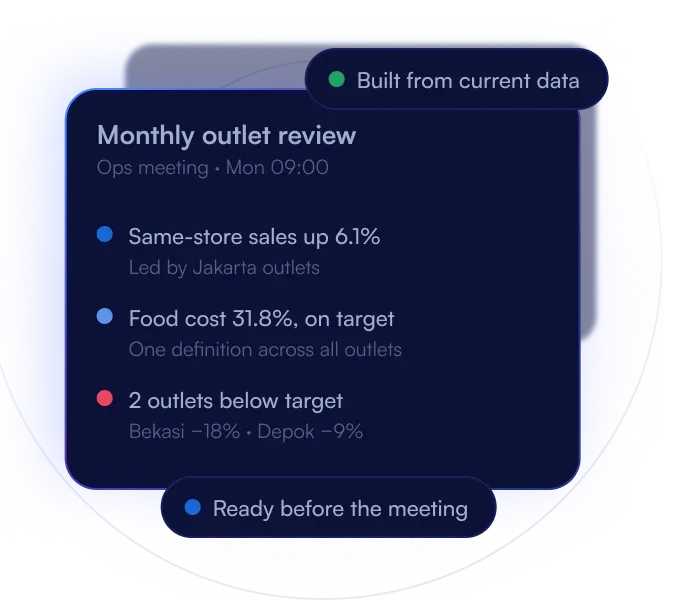
Bring every outlet's reporting into one document with consistent metric definitions, so meeting time goes into deciding what to do rather than reconciling figures between departments.
WORKFLOW
The work that normally eats several days, and how the sequence changes.
The way it works today Collect
Data sources are connected once, up front
The way it works today: Request a recap from every outlet manager
 Ask
The question is asked in plain language
The way it works today: Wait for the files to arrive one by one
 Join
edic joins the data across every source
The way it works today: Reconcile menu names and periods by hand
 Explain
Findings come with an explanation of the cause
The way it works today: Merge in COGS data from another system
 Present
Charts and the presentation are built too
The way it works today: Build the charts and slides for the meeting
 Repeat
Next month, it only needs scheduling
The way it works today: Repeat the whole thing next month
ROLES
Each role needs a different slice of the same underlying data.

Not answered here? Our team is happy to help.
No. edic reads data from the systems already running. What gets connected is the data source, not a replacement for the system.